
Universities won’t give back the land — but they will bury history
Top Story
•
July 16, 2026
•
0 Views
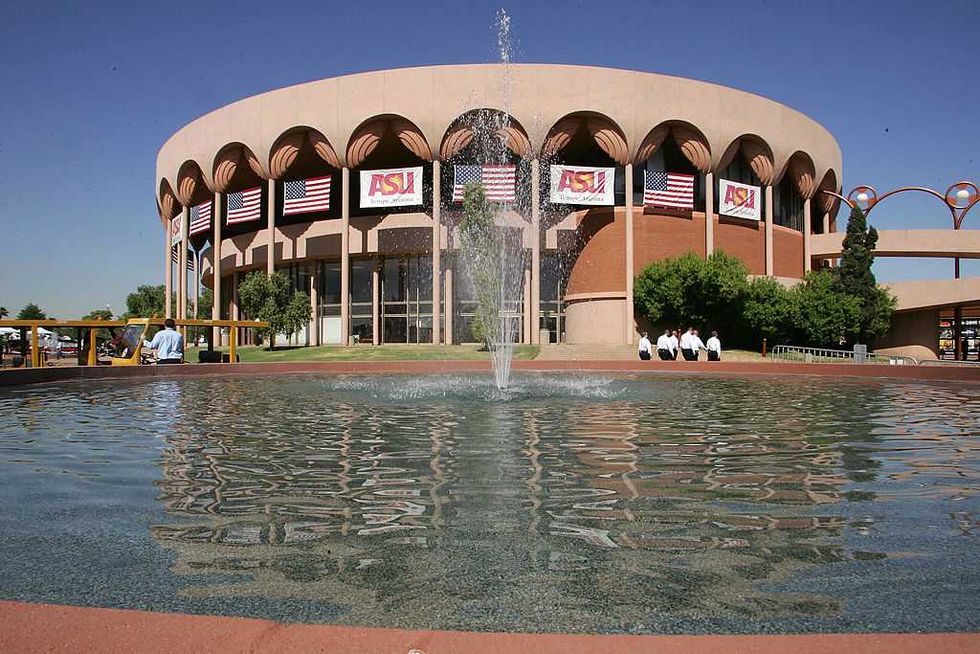
Anyone who has spent time on a university campus recently has likely been forced to sit through a Native American land acknowledgment.At Arizona State University, one plays on repeat as guests wait for graduation ceremonies to begin. Faculty in my college must sit through the ritual before we can even start business meetings.The proper response to historical injustice is not to destroy historical evidence. It is to preserve it, study it honestly, and allow future generations to learn from it.As you might expect, no university is handing back its land. Neither are the professors who recite these acknowledgments with the solemnity of a Marxist prayer while continuing to live comfortably on the same “tribal lands” they claim were unjustly taken.Instead, they join celebrities such as Billie Eilish in proclaiming that “no one is illegal on stolen land” while living, working, and drawing salaries on the very land they call stolen.Universities have perfected the art of virtue signaling. These modern sophists repeat fashionable slogans without changing their own behavior.Until now, land acknowledgments have mostly been harmless theater, something for the larger community to mock or ignore. But the ideology behind them is no longer satisfied with symbolic gestures. It is beginning to reshape museums, archaeology, and our understanding of American history.A new report from the Goldwater Institute by anthropologist Elizabeth Weiss argues that a movement originally intended to promote respect for Native American remains has evolved into something very different.Instead of balancing scientific inquiry with legitimate tribal concerns, museums and universities increasingly adopt interpretations of the Native American Graves Protection and Repatriation Act that close off research, empty museum collections, and place archaeological evidence beyond the reach of scholars.Congress enacted NAGPRA in 1990 to address genuine abuses. Archaeologists had sometimes removed human remains and funerary objects without sufficient respect for tribal beliefs. The law sought to correct those wrongs while preserving legitimate scientific research.Sacred objects, identifiable ancestral remains, and funerary items could be returned to affiliated tribes, while materials outside those categories would remain available for study and public education.According to Weiss, that compromise is disappearing.RELATED: Trump’s Justice Department is shining a light on woke universities — finally Werner Forman/Universal Images Group/Getty ImagesToday, institutions increasingly treat materials Congress never intended to repatriate as sacred tribal property. Weiss documents examples involving ordinary research samples, animal bones, pollen samples, carbon-dating materials, and other archaeological evidence being transferred out of scientific collections under expansive interpretations of federal regulations.Once these materials are repatriated and reburied, many become effectively unavailable for future scientific study.That should concern anyone who values historical inquiry.Every generation develops better methods of studying the past. DNA sequencing, isotope analysis, and improved dating techniques have revolutionized archaeology over the past 30 years. Materials that seemed scientifically unremarkable in 1990 can yield new discoveries today.Once those materials are permanently reburied or removed from research collections, future discoveries become impossible.Imagine applying the same principle elsewhere.Suppose medieval manuscripts could no longer be studied because descendants of their authors objected. Suppose Civil War artifacts disappeared into private collections because modern groups claimed a spiritual interest in them.Historians would rightly protest that the past belongs to all humanity, not merely to those who claim the strongest emotional attachment to it.Weiss also argues that some archaeological materials predate any historically identifiable modern tribe, making cultural affiliation itself a matter of dispute. In such cases, the objection is not merely to disrespectful handling. The objection is to the possession of artifacts at all.Yet something very similar is happening in parts of American archaeology.The irony is obvious. Universities constantly tell the public to “follow the science.” But here, scientific investigation increasingly yields to political pressure and ideological fashion.Museums were once expected to preserve evidence, not remove it from public view. Archaeologists were trained to ask what the evidence reveals, not what contemporary activism permits them to say.Weiss argues that Arizona provides an especially important case study because of its extraordinary archaeological heritage. For generations, Arizona museums and universities helped reconstruct thousands of years of Southwestern history through careful excavation, preservation, and analysis.As more collections become inaccessible and more materials are removed from research, that work becomes increasingly difficult — and in some cases impossible.The problem extends beyond archaeology.Universities have increasingly adopted a philosophy that treats history primarily through oppression and colonization. Land acknowledgments are one visible expression of this worldview. They present contemporary Americans as perpetual beneficiaries of historical injustice while implying that present-day institutions possess diminished moral authority because of the past.The White House has criticized Smithsonian leadership for teaching a politicized version of American history. It often feels as if America’s enemies hired professors and museum curators to spread anti-American propaganda at taxpayer expense.RELATED: College professors want your child’s soul. Here’s how you can stop them. More likely, they did not have to do a thing. They can simply sit back and watch as the radical left undermines what is beautiful in America and replaces it with the intersectionality grid.This outlook changes how universities approach nearly everything they teach.Rather than ask, “What happened?” they increasingly ask, “Whose narrative should prevail?” Rather than preserve evidence so future generations can investigate it, they prioritize symbolic acts of moral repair over continued inquiry.That’s backward.The proper response to historical injustice is not to destroy historical evidence. It is to preserve it, study it honestly, and allow future generations to learn from it.Science and history are not enemies of respect. They are among the greatest tools we possess for understanding those who came before us.Ironically, the universities that require faculty and students to affirm the importance of “decolonizing knowledge” often become less interested in knowledge itself.Once political symbolism becomes more important than evidence, museums cease to function as museums. They become instruments of ideological education.In 2020, faculty in my college were encouraged to begin “decolonizing” our curriculum. Yet this same college remains ever vigilant against any apparent Christian bias in my classes.The solution is not to repeal NAGPRA or ignore legitimate tribal concerns. Congress intended a balance between respect for Native American communities and the preservation of scientific inquiry.That balance should be restored.As Weiss argues, current regulatory interpretations have moved well beyond the statute’s original purpose and placed important areas of archaeological research at risk.Universities should be places where evidence is preserved, competing interpretations are debated, and history is pursued wherever the facts lead.Instead, many have embraced a politics of symbolism that values moral performance over intellectual discovery.Land acknowledgments are easy. Preserving the archaeological record for future generations is much harder.One is an empty ritual to appease intersectional ideology.The other is the actual work of a university.
Source: https://www.theblaze.com/feeds/feed.rss - Read Original


"Retirement Health Care"
Discussion (0)
Please log in to post a comment.
No comments yet. Be the first to share your thoughts!
Sponsored

"Camping the Easyway"