
Divided Fed Greenlights Quarter-Point Cut Amidst Mounting Economic Anxiety
News
•
December 10, 2025
•
54 Views
📰 Divided Fed Greenlights Quarter-Point Cut Amidst Mounting Economic Anxiety
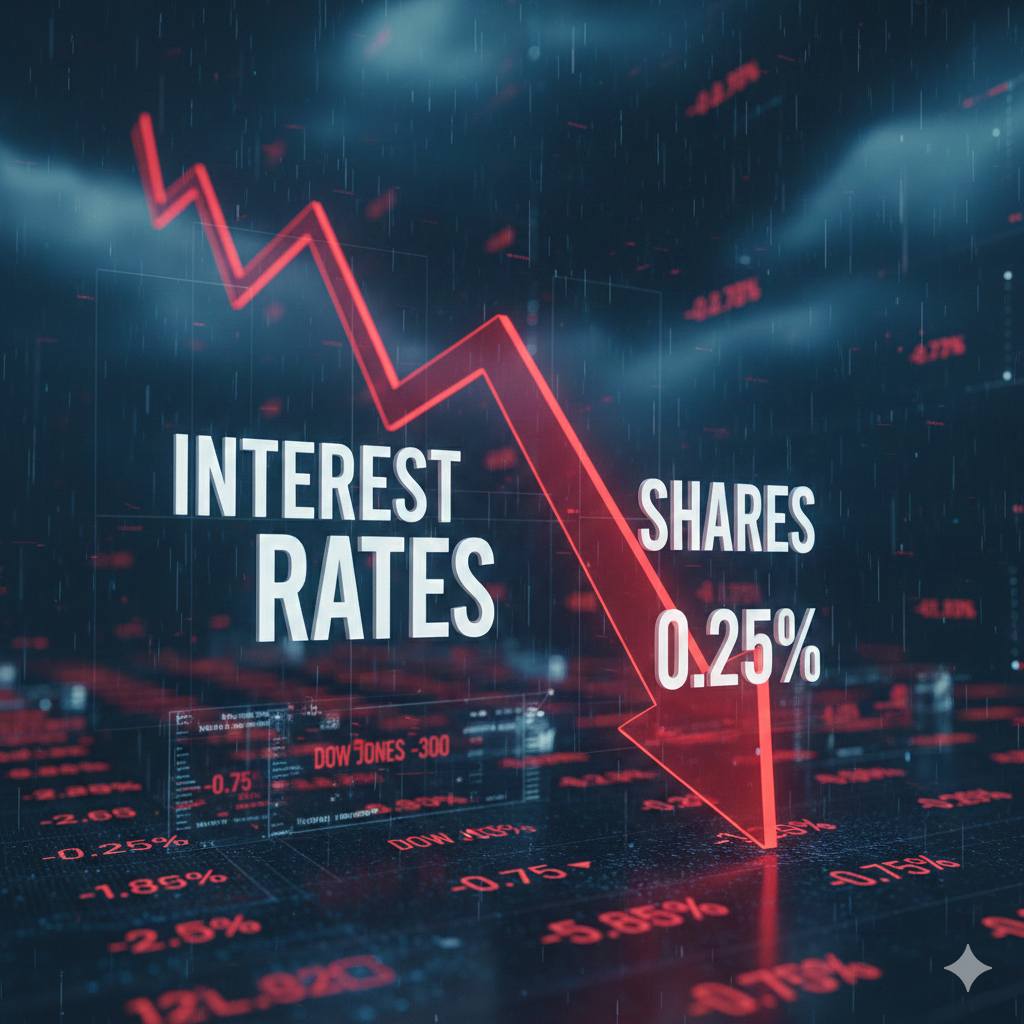
WASHINGTON D.C. – The Federal Reserve’s rate-setting body, the Federal Open Market Committee (FOMC), delivered a closely watched 0.25 percentage point cut to the benchmark federal funds rate today, moving the target range to 3.50%–3.75%. The decision, while aimed at bolstering a sputtering jobs market, was notable for its rare level of dissent and the persistent concerns it raises about the underlying health of the U.S. economy and its path into 2026.
🛑 A Rare Three-Vote Dissent
In a sign of deep internal division, the final vote was 9-to-3, marking the most dissenting votes since 2019. The three “no” votes reflected a fractured committee view on the appropriate course for monetary policy:
Two regional Fed presidents voted to keep rates unchanged, citing concerns that inflation, while having receded, remains stubbornly above the Fed's 2% annual target. They argue that further rate cuts risk prematurely reigniting price pressures.
One Fed Governor dissented in favor of a larger, 0.50 percentage point reduction, arguing that the recent severe deterioration in the labor market requires more aggressive easing to prevent a hard landing.
The unusual level of disagreement suggests Fed Chair Jerome Powell is facing an increasingly challenging task of building consensus as the economic outlook grows more convoluted.
📉 Labor Market's Alarming Signals
The push for a rate cut was largely driven by recent, less-than-rosy economic data, particularly in the labor market. Quarterly job reports have painted a picture of a slowdown:
Job Growth Stalled: Monthly nonfarm payroll gains have slowed dramatically, falling from robust earlier figures to a near-stall speed, with some months even seeing job losses after revisions.
Rising Unemployment: The headline unemployment rate has trended upward, climbing to levels not seen in several years, while the number of long-term unemployed continues to rise.
Sectoral Weakness: While healthcare and hospitality show resilience, traditional industries like manufacturing and transportation are shedding jobs, highlighting an uneven economic recovery.
Critics of the central bank's timing argue that the current rate cut is an overdue reaction to data that indicates the economy has already entered a significant slowdown.
🤔 The 'Messing with Numbers' Controversy and 2026 Recession Fears
The current data landscape has been further complicated by a recent government shutdown, which led to a delay and gap in key labor and inflation statistics. This data vacuum, combined with a perception of manipulated or delayed reporting from various federal departments—a claim vehemently denied by officials—has fueled suspicion among some market observers.
The underlying concern is that policymakers are understating the economy’s weakness, potentially leading to a delayed but sharper downturn. Multiple economic forecasts still place a notable probability (ranging from 30% to 35%) on a U.S. recession in 2026. Analysts point to a combination of persistent, though moderating, inflation, slowing wage growth, and the lagged effect of previous tightening cycles as key risk factors.
While the Fed's move is an attempt to inject stimulus and support the job market, the narrow vote and the shadow of a potential future recession highlight the high-stakes gamble the central bank is taking as it navigates a precarious and highly polarized economic environment.
Ryan S Taylor
WASHINGTON D.C. – The Federal Reserve’s rate-setting body, the Federal Open Market Committee (FOMC), delivered a closely watched 0.25 percentage point cut to the benchmark federal funds rate today, moving the target range to 3.50%–3.75%. The decision, while aimed at bolstering a sputtering jobs market, was notable for its rare level of dissent and the persistent concerns it raises about the underlying health of the U.S. economy and its path into 2026.
🛑 A Rare Three-Vote Dissent
In a sign of deep internal division, the final vote was 9-to-3, marking the most dissenting votes since 2019. The three “no” votes reflected a fractured committee view on the appropriate course for monetary policy:
Two regional Fed presidents voted to keep rates unchanged, citing concerns that inflation, while having receded, remains stubbornly above the Fed's 2% annual target. They argue that further rate cuts risk prematurely reigniting price pressures.
One Fed Governor dissented in favor of a larger, 0.50 percentage point reduction, arguing that the recent severe deterioration in the labor market requires more aggressive easing to prevent a hard landing.
The unusual level of disagreement suggests Fed Chair Jerome Powell is facing an increasingly challenging task of building consensus as the economic outlook grows more convoluted.
📉 Labor Market's Alarming Signals
The push for a rate cut was largely driven by recent, less-than-rosy economic data, particularly in the labor market. Quarterly job reports have painted a picture of a slowdown:
Job Growth Stalled: Monthly nonfarm payroll gains have slowed dramatically, falling from robust earlier figures to a near-stall speed, with some months even seeing job losses after revisions.
Rising Unemployment: The headline unemployment rate has trended upward, climbing to levels not seen in several years, while the number of long-term unemployed continues to rise.
Sectoral Weakness: While healthcare and hospitality show resilience, traditional industries like manufacturing and transportation are shedding jobs, highlighting an uneven economic recovery.
Critics of the central bank's timing argue that the current rate cut is an overdue reaction to data that indicates the economy has already entered a significant slowdown.
🤔 The 'Messing with Numbers' Controversy and 2026 Recession Fears
The current data landscape has been further complicated by a recent government shutdown, which led to a delay and gap in key labor and inflation statistics. This data vacuum, combined with a perception of manipulated or delayed reporting from various federal departments—a claim vehemently denied by officials—has fueled suspicion among some market observers.
The underlying concern is that policymakers are understating the economy’s weakness, potentially leading to a delayed but sharper downturn. Multiple economic forecasts still place a notable probability (ranging from 30% to 35%) on a U.S. recession in 2026. Analysts point to a combination of persistent, though moderating, inflation, slowing wage growth, and the lagged effect of previous tightening cycles as key risk factors.
While the Fed's move is an attempt to inject stimulus and support the job market, the narrow vote and the shadow of a potential future recession highlight the high-stakes gamble the central bank is taking as it navigates a precarious and highly polarized economic environment.
Ryan S Taylor
Discussion (0)
Please log in to post a comment.
No comments yet. Be the first to share your thoughts!